
Author and Old Testament scholar Walter Brueggemann will be teaching tonight at Mount Vernon Nazarene University @ 7:30 p.m. in the R.R. Hodges Chapel Auditorium. For all friends and acquaintances we will be gathering in our apartment (Oakwood Hall RD Apt.) immediately following the lecture for coffee, tea, and something else equally arbitrary.
Showing posts with label writing. Show all posts
Showing posts with label writing. Show all posts
Tuesday, March 04, 2008

Saturday, February 16, 2008
Blogging is the new "devotions?"
Remeber that term "devotions?"
"Did you do your devotions today?"
"I need to spend 15 minutes a day in my devotions."
What did that even mean?
I can only presume that the language of "devotions" was used as the idea of being devoted to God. So did that mean that only 15 minutes a day was devoted to God? I have always preferred the idea of the disciplines. Reading, solitude, writing, and prayer are all fundamental elements of the Christian life. I maintain a personal journal that I do not publish here but have also found that blogging has become a source of fulfillment as a discipline. We are able to read the thoughts and lives of fellow sojourners and learn and grow from one another. When I ensure that I have time to post and read others' posts I feel more creative and imaginitive as a hopeful follower of Jesus.
Friday, February 08, 2008
Emergent Assignment.

I am especially excited about my current assignment. There is the possibility that my writing will be published in a journal as a part of a project conducted by our professor. My paper is likely to be entitled, "The Silent Historical Framework of the Emergent Church: Recovery of Genuine Wesleyan Theology in Postmodern Context." I will be reviewing Eddie Gibbs' and Ryan Bolger's book entitled "Emerging Churches: Creating Christian Community in Postmodern Cultures" in light of Wesleyan theology (which I have discovered is highly misunderstood by Wesleyan based churches and theologians).
Thursday, December 13, 2007
Clarity and Mystery.
 Apparently, I have been reading too much. I had to get glasses for reading, writing, and blogging due to a slight stigma, farsightedness, and ocular fatigue. It is relieving to have greater clarity when I read. At times I think that I would like greater clarity of thought, perspicuity in communication, and lucidity of vision but am trying to embrace the fatigue that accompanies the beauty of the unknown and unseen mystery of the kingdom of God.
Monday, July 30, 2007
Kingdom Within
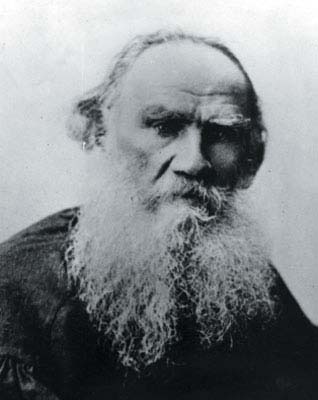
What are the evils of the kingdoms of this world politically, legally, and ecclesiastically?
Tolstoi (translated as "Tolstoy" in English) was born into Russian nobility in 1828. His writings, including Anna Karenina, War and Peace, and Confession focus on the brutality of the Russian czar and the oppression of the ruling class.
Subscribe to:
Posts (Atom)


